
SPECTRUM
Improve the footballer's decision-making
According to Daniel Kahneman's theory of cognitive systems, human decision-making operates through two distinct modes: System 1 and System 2. System 1 is fast, intuitive, and automatic, relying on instinct and experience to quickly interpret situations and make judgments. In contrast, System 2 is slower, deliberate, and analytical, requiring conscious effort and logical reasoning to reach conclusions.
According to Daniel Kahneman's theory of cognitive systems, human decision-making operates through two distinct modes: System 1 and System 2. System 1 is fast, intuitive, and automatic, relying on instinct and experience to quickly interpret situations and make judgments. In contrast, System 2 is slower, deliberate, and analytical, requiring conscious effort and logical reasoning to reach conclusions.
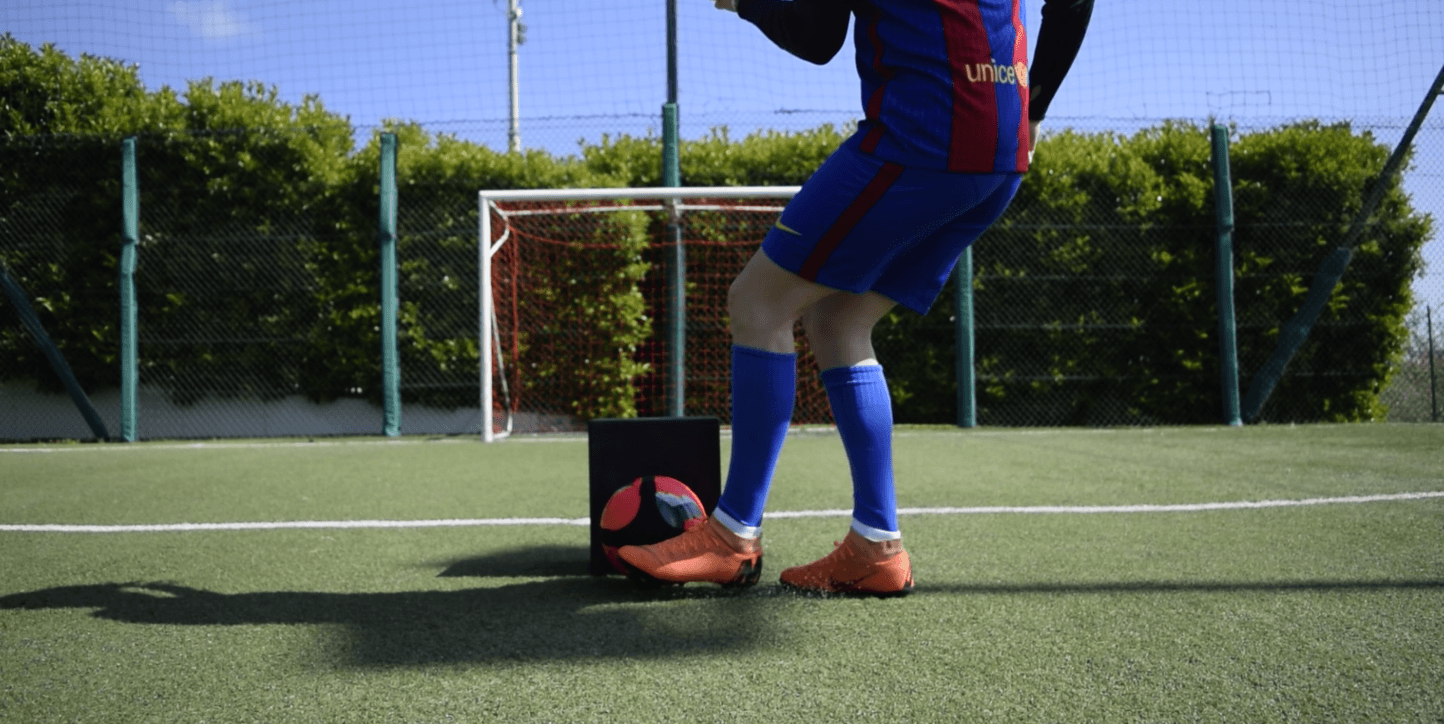
Problem
System 1 is one of the two main systems of human thinking, responsible for quick and intuitive decisions. This system operates automatically and effortlessly, relying on information already stored in our long-term memory.
It is particularly useful when we need to react quickly, such as in emergencies or when we draw on experience to solve familiar problems. However, the efficiency of System 1 comes with a significant limitation: if the stored information is incorrect or incomplete, our mind will continue to lead us to make poor decisions.
This results in repetitive mistakes and cognitive biases, as the system does not critically analyze data but uses it as it is. To improve our intuitive decisions, it is essential to regularly update and correct the knowledge stored in memory, thereby avoiding automatic mental traps.
Design Process
Content & Strategy
Content & Strategy
Discover & Research
Discover & Research
Define
Define
Ideate
Ideate
Design
Design
Test & Evaluate
Test & Evaluate
Results
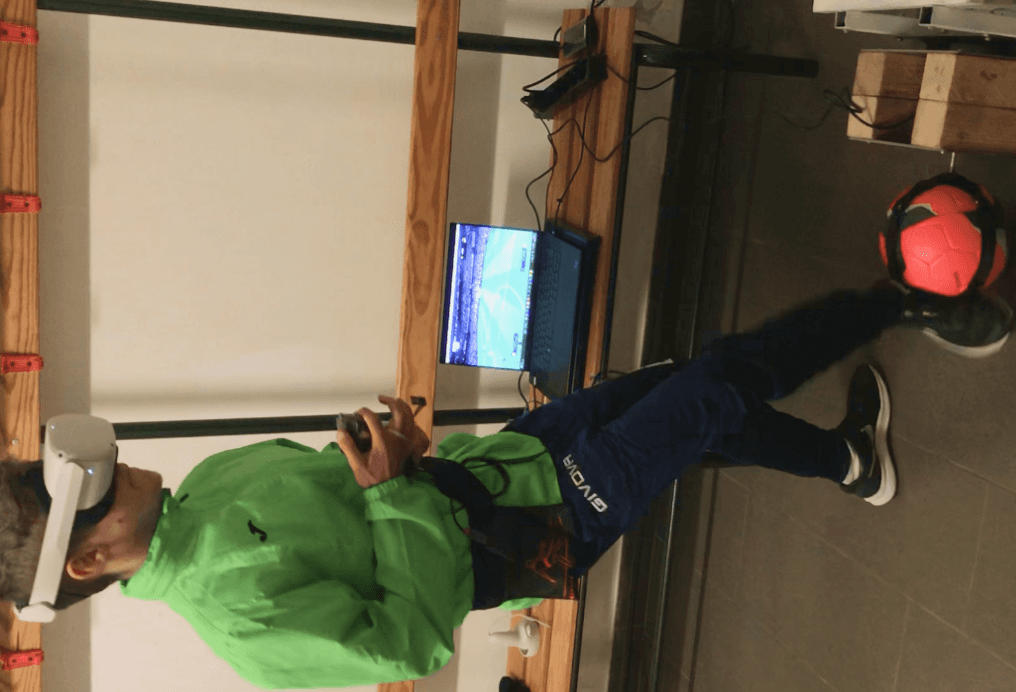
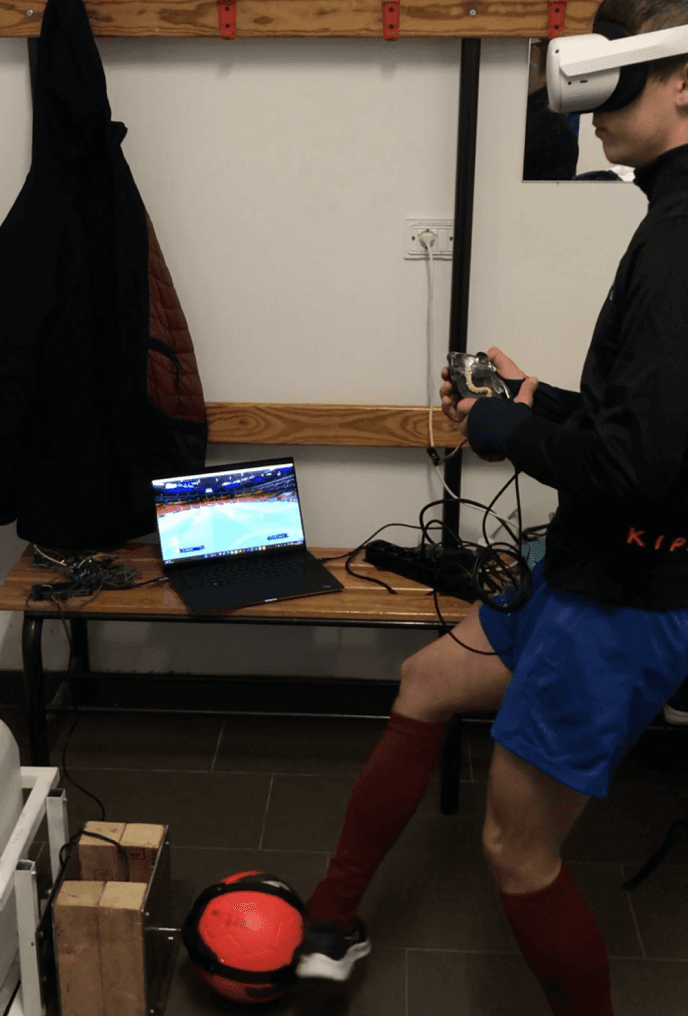
Training with Spectrum
Giuseppe
Giuseppe
Giovanni
Giovanni
Training without Spectrum
Alessandro
Alessandro
Michele
Michele
% of improvements
% of improvements
Giuseppe
Giuseppe
Giovanni
Giovanni
+10.94%
+10.94%
+16.05%
+16.05%
-14.28%
-14.28%
-8.53%
-8.53%
Alessandro
Alessandro
Michele
Michele
At the end of the experiment, footballers trained with the Spectrum system improved their performance by unlearning past mistakes and refining automatic responses in a safe simulation environment.
This process enhanced their decision-making, reaction speed, and confidence under pressure, leading to smarter and more composed gameplay during matches.